 All resources
Feeling the Heat (Wave): Addressing the Cooling Crisis at London Climate Action Week
Ask British people to describe their typical weather and you’ll get largely the same answer: grey, damp, and never quite warm enough. However, attendees of this year’s London Climate Action Week (LCAW) would beg to differ, with a record-breaking heat wave — the country’s second in as many months — becoming the only thing anyone could talk about.
Extreme heat was already on the agenda at LCAW, with several sessions dedicated to climate resilience and sustainable cooling, but the timing of the heat wave pushed the topic to the center of the conversation. Much of that came down to London’s own vulnerabilities — a building stock, transport network, and urban landscape not designed for today’s high temperatures, paired with a general lack of fans and air conditioners across the city. The irony reached its peak when one of the week’s events on extreme heat was cancelled because its venue had no way to keep participants and attendees cool in 35° C (95° F) temperatures.
The week offered a stark, physical reminder that extreme heat isn’t an abstract, future risk, but a present and escalating crisis, one that many communities in the Global South have been living with for years. It was also a reminder that the Global North is not immune to the impacts of the climate crisis, with thousands of heat-related deaths recorded across Europe in recent weeks. Attendees weren’t just discussing resilience in theory, they were experiencing its absence firsthand in overheated conference rooms, delayed trains, and streets offering little shade or relief.
The undeniable importance of cooling access
As the frequency, intensity, and duration of heat waves continue to rise around the world, the importance of cooling access cannot be overstated. Cooling access spans a wide spectrum, from mechanical solutions like fans and air conditioners, available at the household level or communally through cooling centers, to passive solutions like shading (trees, shutters, awnings), natural ventilation, and reflective surfaces such as cool roofs, walls, and pavements.
When combined, these various solutions can create thermally comfortable environments in which people can safely sleep, work, and study — things that are becoming increasingly difficult to do in our warming world.
In recognition of this fact, cooling action was noticeably more present at this year’s LCAW than in previous editions. Sessions moved beyond cooling solutions themselves, with a particularly strong focus on adaptation, resilience, and who gets left out when cooling isn’t accessible.
Refreshingly, voices and experiences from the Global South featured heavily in these discussions, offering a lens of lived experience and best practices from the front lines of heat exposure. For these communities, extreme heat is not a new emergency, but a decades-long reality shaping how homes and neighborhoods are built and how days are structured.
HERA (formerly Climate Resilience for All) hosted an event showcasing its new tool designed to drive better heat solutions at the city level; Cambridge University hosted a panel discussion on heat, health, and resilient futures; and the European Bank for Reconstruction and Development (EBRD) explored the impact of nature-based solutions during its session on heat resilience in cities.
This emphasis on Global South leadership also comes at an important moment. COP32 is set to take place in Addis Ababa, Ethiopia in 2027 — the first time the summit will return to Sub-Saharan Africa in over a decade. As the continent prepares to shape the agenda on adaptation, finance, and resilience, platforms like LCAW have a significant role to play in ensuring Global South voices and expertise carry real weight in the conversation and set the terms of the debate.
Sustainable solutions and fast action
In addition to making sure people have access to the cooling they need, it is also vital that we make sure that the cooling solutions being rolled out are sustainable. Failing to do so will just exacerbate the problem.
The clearest starting point is passive cooling solutions at the building- and city-levels. These approaches are generally low-cost, low-carbon, and high-impact, and they reduce the need for mechanical cooling in the first place. A passive-first approach isn’t a rejection of mechanical cooling, it simply improves the thermal comfort baseline for everyone, but particularly for those who may not be able to afford cooling appliances.
Fans and air conditioners remain essential, particularly as heat exposure intensifies, but as demand rises, so does the urgency of making mechanical cooling energy efficient. Without this efficiency push, demand growth risks locking in decades of avoidable energy use and emissions.
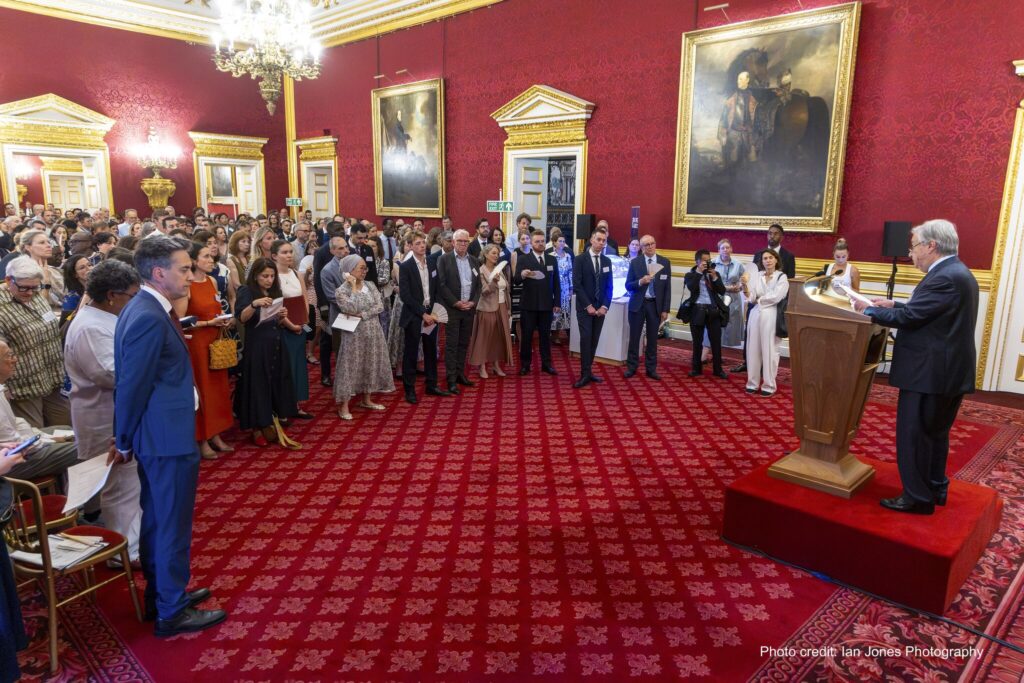
Refrigerants are also a critical part of the picture, responsible for roughly one-third of the sector’s emissions. This year marks the 10th anniversary of the Kigali Amendment to the Montreal Protocol, the global agreement to phase down hydrofluorocarbon (HFC) refrigerants, among the most potent greenhouse gases in use today. A high-level gathering on super pollutants, where UN Secretary-General António Guterres joined UK Energy Secretary Ed Miliband and Barbados Prime Minister Mia Mottley at an event hosted with King Charles, renewed calls to accelerate action on super pollutants including methane and HFCs, and pointed to the economic and health benefits of action across sectors.
None of this work can happen without finance. Sustainable cooling remains chronically underfunded relative to its climate impact, and efforts to close that gap were visible at LCAW too. SEforALL signed a new partnership with the EBRD to accelerate decentralized renewable energy, sustainable cooling, and climate resilience across Africa and other developing economies. An event co-hosted by CoolPact Capital and BASE Foundation brought together experts from across the field to discuss how to overcome the various barriers to sustainable cooling finance.
Taken together, these threads point to the same conclusion: cooling access (adaptation) and sustainability (mitigation) are not competing priorities. They have to be solved together, and quickly.
Looking ahead
With LCAW now a solid fixture on the international climate calendar, the collision of message and moment at this year’s event will go a long way in reshaping how extreme heat and sustainable cooling are discussed at major fora going forward. No longer a side conversation, heat resilience is poised to become a central one, finally getting the attention it deserves.
But extreme heat and cooling are not just topics to be discussed at meetings and summits, they are urgent issues that require urgent action. The tools already exist: passive-first design, more efficient mechanical cooling, accelerating progress on refrigerants through Kigali Amendment implementation, and a strengthening pipeline of sustainable cooling finance. What is needed now is the speed and scale to match the pace of the problem. The path forward calls for sustained investment, cross-regional collaboration, and centering Global South leadership in shaping the necessary solutions.
This year’s LCAW made one thing hard to ignore: extreme heat is no longer a future risk to be planned for at a comfortable distance. It’s a present one, being felt in real time — in London, and everywhere else. The question is no longer whether the world will act on it, but whether it will act fast enough.