New Report Sets a Course for Efficient, Climate-Friendly Cooling for All

Every year, the world witnesses a significant rise in the frequency, duration, and deadliness of heat waves and other extreme heat events. At the same time, expanding urban populations and rising incomes drive the demand for cold chains and air conditioning, putting additional strain on power grids and increasing the risk of outages, especially during peak heat conditions.

To align with global climate change, economic development, and equity goals, we must reduce cooling-related greenhouse gas (GHG) emissions while meeting people’s cooling and refrigeration needs. Achieving this balance helps mitigate further warming and safeguards public health and prosperity.

The Clean Cooling Collaborative (CCC) and our funding and implementing partners have been leading the battle against extreme heat by reducing the sector’s GHG emissions and expanding access to life-saving cooling.

Our new Mid-Program Impact Report details the work we’ve supported over the past two years and how we’re setting a course for scaling efficient, climate-friendly cooling solutions for all.

Our approach

In 2022, we refreshed our program and rolled out a new strategy built around four areas of work:

•  RAISE the profile of — and resources for — efficient, climate-friendly cooling as a core climate mitigation, development, and equity opportunity

•  AVOID/REDUCE the need for mechanical cooling through improved building design, urban planning, and other passive cooling solutions

•  OPTIMIZE/IMPROVE cooling technologies and how they’re used to become more energy-efficient, climate-friendly, and grid-friendly while advancing deployment

•  INCREASE ACCESS to efficient, climate-friendly cooling for low-income, heat-vulnerable communities

While remaining a global program, we adjusted our grantmaking to focus primarily on four priority geographies: China, India, Southeast Asia, and the United States. Projections show that, together, these regions will account for an estimated 75% of cooling sector-related GHG emissions between now and 2050.

Adopting a collaborative approach, we have established a powerful coalition of funding and implementing partners to mobilize governments, industry stakeholders, financial institutions, and businesses to act on cooling.

Mid-program highlights

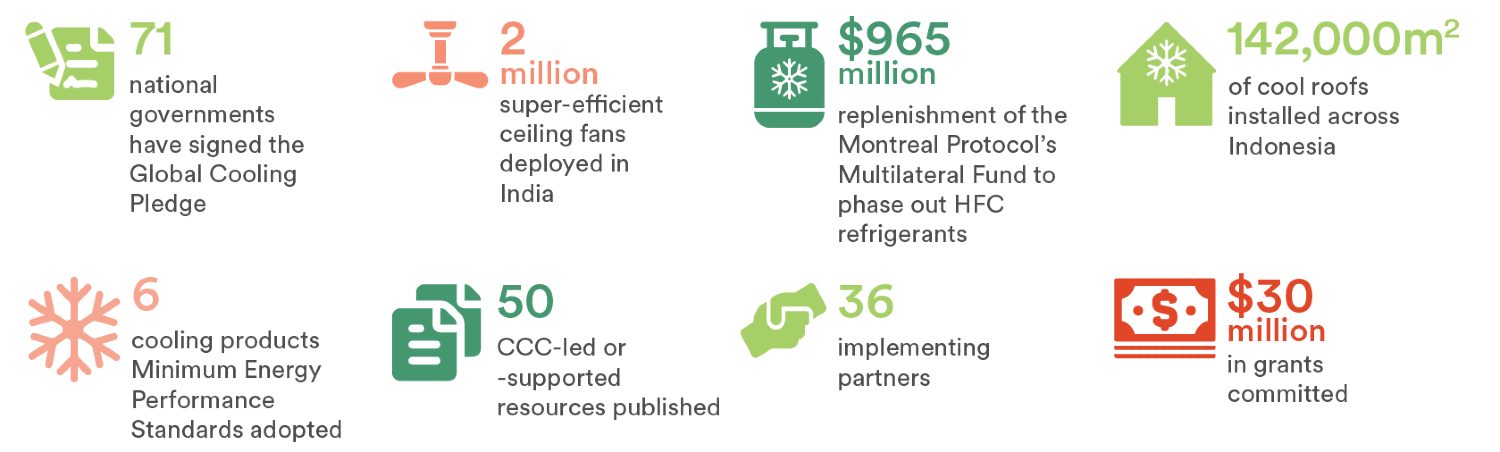
With our implementing partners leading the way, this collaborative has achieved major strides, from supporting the development and implementation of national policies that significantly enhance the energy efficiency of cooling appliances to launching community-level programs that facilitate access to cooling for those most impacted by heat. The work we’ve supported since 2022 has already made a tangible difference in people’s lives and locked in gigaton-scale GHG emissions reductions by mid-century.

Some highlights from the past two years include:

Clean Cooling Collaborative mid-program highlights

To monitor our impact across the cooling sector, we’ve established 20 success indicators covering our full project portfolio, which you can find in the report’s Results Framework Scorecard. So far, we have exceeded five targets, achieved three, and made promising progress in the remaining twelve.

The road ahead

It is inspiring to see the collective impact of a mobilized clean cooling community. This network of change-makers is creating an environment where clean cooling solutions can develop and thrive.

However, while it is important to take some time to reflect on and celebrate our successes, we must remain focused on the fact that much more is needed. Over the coming years, it is paramount that the CCC team, our partners, and the wider cooling community ramp up efforts to accelerate and scale the adoption of efficient, climate-friendly cooling solutions.

Our dedication to raising awareness of extreme heat issues and the opportunities that clean cooling presents for climate and development has never been stronger. We will continue investing in high-impact solutions, facilitating enhanced collaboration and coordination, demonstrating the compounded impact of collective action, and building a future with efficient, climate-friendly cooling for all.

Read the full CCC Mid-Program Impact Report here.

Two Sides of the Equator: Extreme Heat in the Southern Hemisphere

In the colder months of winter, it is understandable to let global temperature rise and the risks of extreme heat temporarily slip our minds. In the Northern Hemisphere, October to May can often provide a welcomed respite, with the heat of summer becoming a distant memory.

However, we must recognize that this respite isn’t universal.

While things may feel cooler in places like San Francisco, Beijing, or Paris during the time those cities experience winter, rising temperatures remain a pressing global issue. It’s essential not to lose sight that when it’s winter in the North, it’s summer on the other side of the world.

Seasonable unpredictability

Not surprisingly, 2023 has been officially confirmed as the hottest year on record, with the boreal summer (June to August) being the hottest individual season, and by a significant margin. In fact, during this period, much of the Northern Hemisphere, including China, Europe, India, and the United States, experienced several extreme heat waves and record-breaking temperatures. With these events came numerous associated impacts, such as death, sickness, and income loss.

Even in the Southern Hemisphere, where it was the end of winter, extreme temperatures prevailed. In August and September, for example, temperatures soared above 104° F (40° C) across large parts of South America, setting a worrying precedent for what the austral summer (November to February) might have in store for the 850 million people — or 10% of the world’s population — who call the Southern Hemisphere home.

This warming trend continued into late 2023, with Brazil recording its hottest-ever temperature when the mercury hit 112.6° F (44.8° C) in November. These high temperatures led to red alerts for almost 3,000 towns and cities across the country and spikes in energy use as residents turned on their air conditioners to stay cool. It is estimated that more than 100 million people were affected by the heat during this period.

And now, in 2024, much of Australia has been battling “sweltering” temperatures above 86° F (30° C), increasing the risk of bushfires. In recent weeks, temperatures in the west of the country have climbed past 104° F. Several countries across Africa and Southeast Asia have also experienced well above-average temperatures over the last month or so.

Overall, around 80% of the world’s population was exposed to “unusual warmth” due to climate change between December 2023 and February 2024.

One of the most worrying aspects of this problem is that scientists predict that these record-breaking temperatures will continue over the coming years due to a combination of the El Niño effect and climate change-driven temperature rise. In fact, the Southern Hemisphere summer of 2024-25 is on track to bear the brunt of these impacts.

Cooling for climate resilience

To cope with rising temperatures — in both hemispheres — billions of people are expected to turn to air conditioning over the coming decades (if they can afford to), with an additional 3 billion AC units projected to be installed worldwide by 2050. Without action, a significant rise in global energy demand and greenhouse gas emissions will accompany the installation of these appliances.

For the billions of people who cannot afford air conditioning, a warmer world presents many risks to their health, well-being, and livelihoods.

To ensure resilience during periods of extreme heat, we must invest in the widespread adoption of energy-efficient, climate-friendly, and affordable cooling solutions. Not only will this ensure that no one is left behind, but it will also minimize the impact staying cool has on our planet and its climate.

In Australia — where heat contributed to the deaths of more than 36,000 people between 2006 and 2007 — a number of actions are being taken to boost resilience. In Sydney, for example, researchers launched mobile cooling hubs to help protect the city’s homeless communities during February’s extreme heat. Australia’s Bureau of Meteorology recently introduced a heatwave warning system, and its state and local governments are investing in nature-based solutions to mitigate urban heat islands. NGOs are also pushing for policies to improve construction codes to ensure more resilient buildings.

In Indonesia, CCC implementing partner Cool Roofs Indonesia is working to expand access to reflective cool roof materials to boost the resilience of low-income housing. Under the Million Cool Roofs Challenge, Cool Roofs Indonesia found that cool roofs could reduce indoor temperatures by up to 10° C (18° F).

Global action

While some countries have a bigger role to play than others, combating the cooling challenge requires global action. The pathway to a cooler future for all is clear, but it requires all stakeholders to get involved.

We must scale up the adoption of passive cooling solutions, dramatically improve the efficiency and grid-friendliness of our cooling technologies, and accelerate our transition to refrigerants with low global warming potential (GWP). Taking such action could result in a 60% reduction in cooling-related emissions by 2050. Decarbonizing our power grids could increase this to 96%.

To encourage the worldwide implementation of these efforts, the Cool Coalition and its partners have developed the Global Cooling Pledge — a set of commitments that countries can make to improve access to cooling while cutting emissions.

Since its launch at COP28, 70 national governments (and multiple other stakeholders) have rallied around the pledge. In the Southern Hemisphere, signatories include some 16 countries, indicating the region’s commitment to action on cooling — from both a mitigation and adaptation point of view.

As one season moves to the next, those in the Southern Hemisphere prepare for the cool of autumn and winter, while billions in the Northern Hemisphere anticipate what this spring and summer may have in store.

However, no matter where you live, temperatures are rising, and heat waves are becoming more frequent, more intense, and longer. We must take urgent action to boost cooling access and reduce cooling-related emissions.

Efficient, climate-friendly cooling for all is critical.

COP28: The Coolest COP to Date

This year’s United Nations Climate Change Conference (COP28) is one for the history books for several reasons, but for me and many others, cooling was among the hottest topics on the agenda.

There were several groundbreaking moments for cooling, from the first-ever Montreal Protocol Pavilion and a designated Cooling Day on December 5, to the publication of the Global Cooling Watch report and the launch of the Global Cooling Pledge. Cooling was truly on the map at this year’s conference. And, in my opinion, it’s about time.

A press conference marked the publication of the Cool Coalition’s Global Cooling Watch report, which presents the first global stocktake of countries’ actions and activities on cooling. It also presents a modeled pathway to get to “near-zero” emissions for the sector. According to the report, we could cut cooling-related emissions by 2050 by over 60% compared to business-as-usual while expanding cooling access to 3.5 billion people. Emissions reductions could reach up to 96% when paired with a decarbonized electric grid. Some powerful motivation for action right there.

“The world can deploy nature-based and passive cooling measures, adopt higher efficiency standards, [and] accelerate the phase-down of climate-warming hydrofluorocarbon refrigerants through the Kigali Amendment to the Montreal Protocol,” explained UN Environment Programme Executive Director Inger Andersen during the press conference.

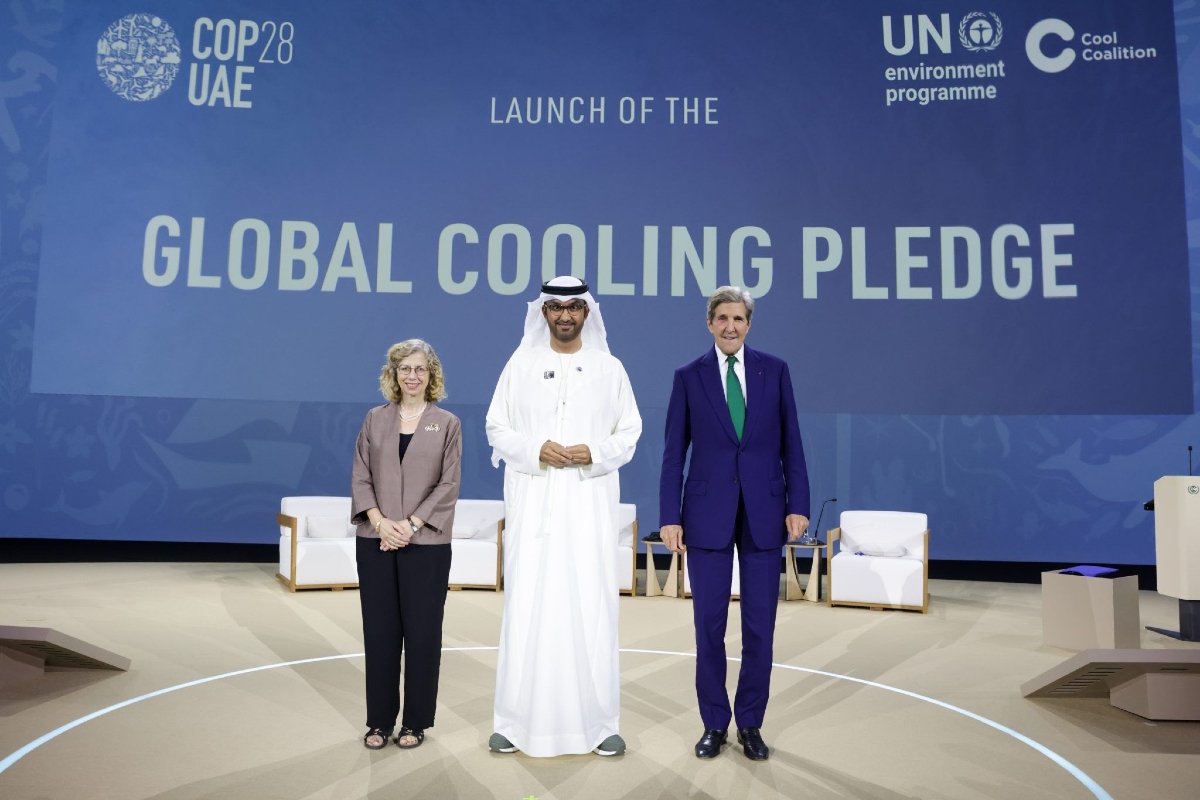
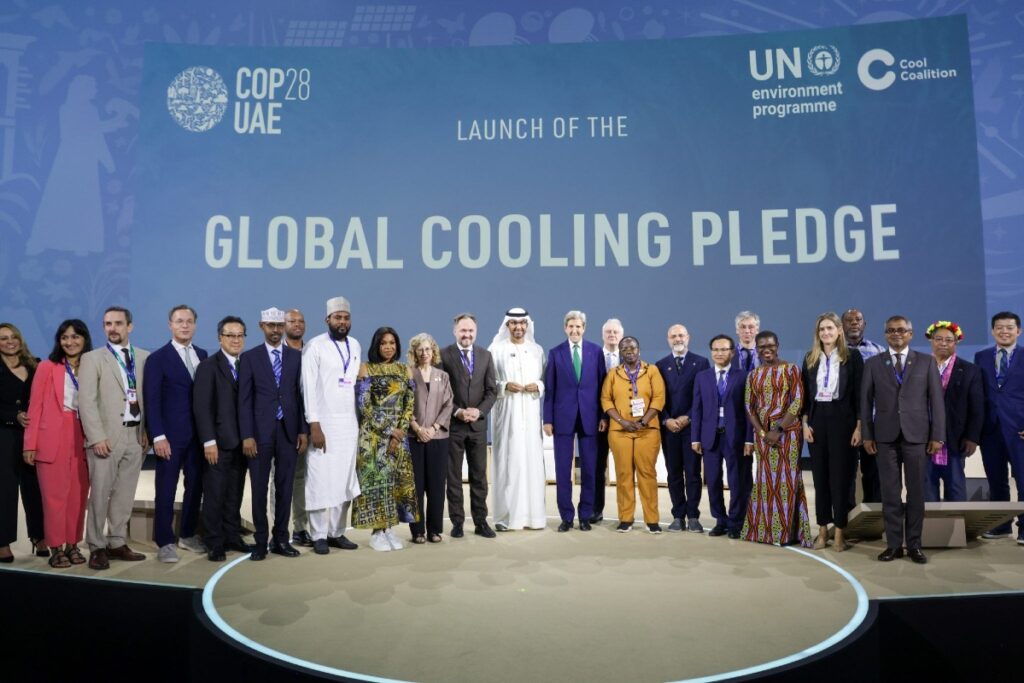
That evening, there was an impressive high-profile event hosted by the UN Environment Programme’s Cool Coalition and UAE COP28 Presidency to celebrate the launch of the Global Cooling Pledge, featuring opening remarks from Andersen as well as U.S. Special Presidential Envoy for Climate John Kerry. Both speakers highlighted the trajectory we are on with regard to rising global temperatures, the booming demand for cooling equipment, and the urgent need to shift to more sustainable — and accessible — cooling solutions.


UNEP Director Inger Anderson, COP28 President Dr. Sultan Ahmed Al Jaber, and U.S. Special Presidential Envoy for Climate John Kerry at the launch of the Global Cooling Pledge. (Credit: Cool Coalition)
UNEP Director Inger Andersen, COP28 President Dr. Sultan Ahmed Al Jaber, and U.S. Special Presidential Envoy for Climate John Kerry at the launch of the Global Cooling Pledge. (Credit: Cool Coalition) 


The following panels featured representatives from multiple governments, including Denmark, Ghana, Japan, the Maldives, Sierra Leone, and the U.K., as well as Damilola Ogunbiyi, CEO of Sustainable Energy for All (SEforALL). Panelists spoke about their concern for the growing access gap and detailed what they are doing to ensure clean cooling solutions reach the communities most impacted by extreme heat.

As of today, 66 countries have signed the Global Cooling Pledge, as well as numerous non-state actors, in support or endorsement of the Pledge. Government signatories commit to implementing over a dozen key actions to curb cooling emissions while increasing access for those facing the threat of extreme heat. We are hopeful that many more stakeholders will seize the moment by following suit and signing the Pledge.


Some of the signatories of the Global Cooling Pledge at COP28. (Credit: Cool Coalition)

The coolest COP to date

Hundreds of events, both big and small, took place over the two weeks, including more than 80 cooling-related sessions — four times as many as in previous years.

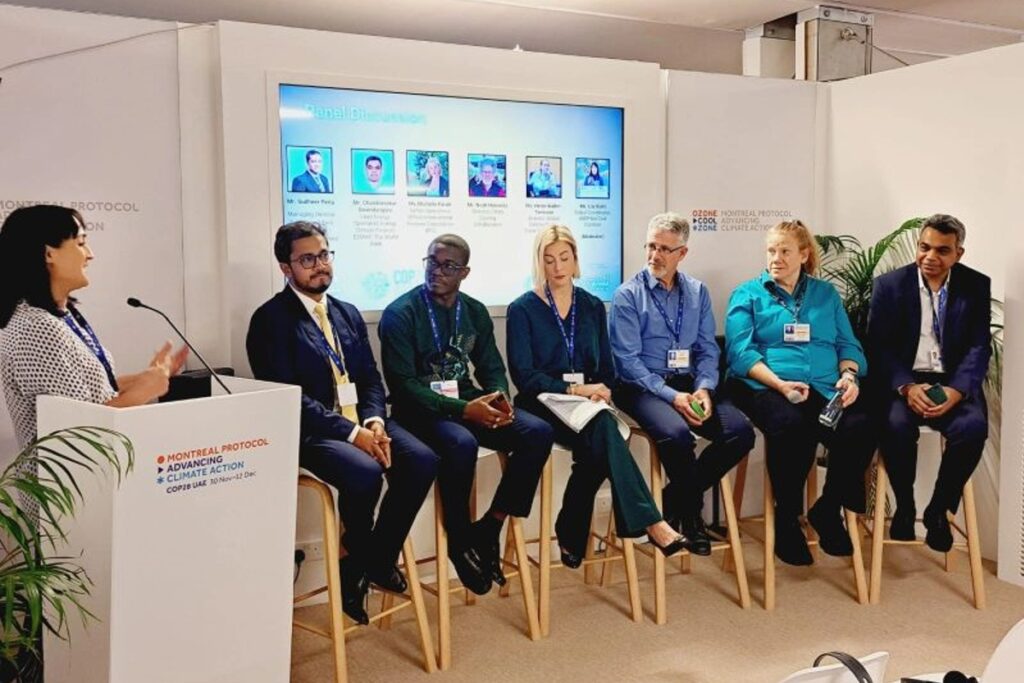
It was a pleasure to participate in the Cool Coalition’s Financing Action on Cooling side event alongside representatives from the World Bank Group, Trane Technologies, the International Finance Corporation (IFC), the Energy Commission of Ghana, and Tabreed Asia.

As the session’s moderator Lily Riahi, Global Coordinator of the Cool Coalition, pointed out, “A lot of reports show that sustainable cooling is not more expensive; we just need to get the financial models, instruments, and business models right.”

Our discussion covered many topics, including cooling-as-a-service (CaaS), minimum energy performance standards (MEPS), on-wage financing initiatives (such as the ECOFRIDGES program), enabling innovation, district cooling, and utility incentives for energy efficiency efforts.


The Cool Coalition's Lily Riahi moderated a panel discussion on financing action on cooling.
The Cool Coalition’s Lily Riahi moderated a panel discussion about financing action on cooling.


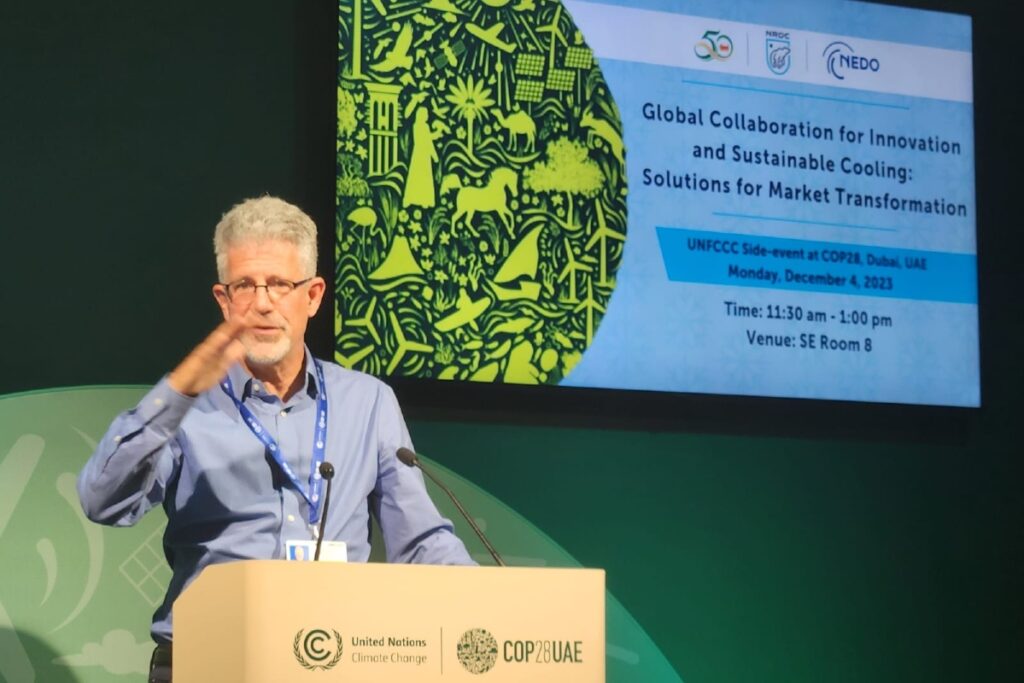
At the Global Collaboration for Innovation and Sustainable Cooling side event — hosted by the Natural Resources Defence Council (NRDC), the Energy and Resources Institute (TERI), and the New Energy and Industrial Technology Development Organization (NEDO) — speakers highlighted the threats posed by extreme heat and the need to make sure sustainable cooling solutions are accessible to all.

The session consisted of two panels, the first of which covered higher-level topics like policy intervention and global partnerships, and the second, which I participated in, focused more on specific solutions and innovations.

During my time on the podium, I discussed the projected 3 billion additional air conditioners likely to be installed globally by 2050 and the challenges they pose to our energy transition and climate targets. To minimize the impact of air conditioning, we need appliances to be super-efficient, like the ACs developed through the Global Cooling Prize that have five times lower climate impact. We also need other sustainable solutions like passive cooling and high-efficiency ceiling fans to keep people and the planet cool.

Cooling is no longer a luxury but a necessity. To put it simply, cooling has become a human right!


CCC Director Noah Horowitz on stage at an official COP28 side event hosted by NRDC, TERI, and NEDO.


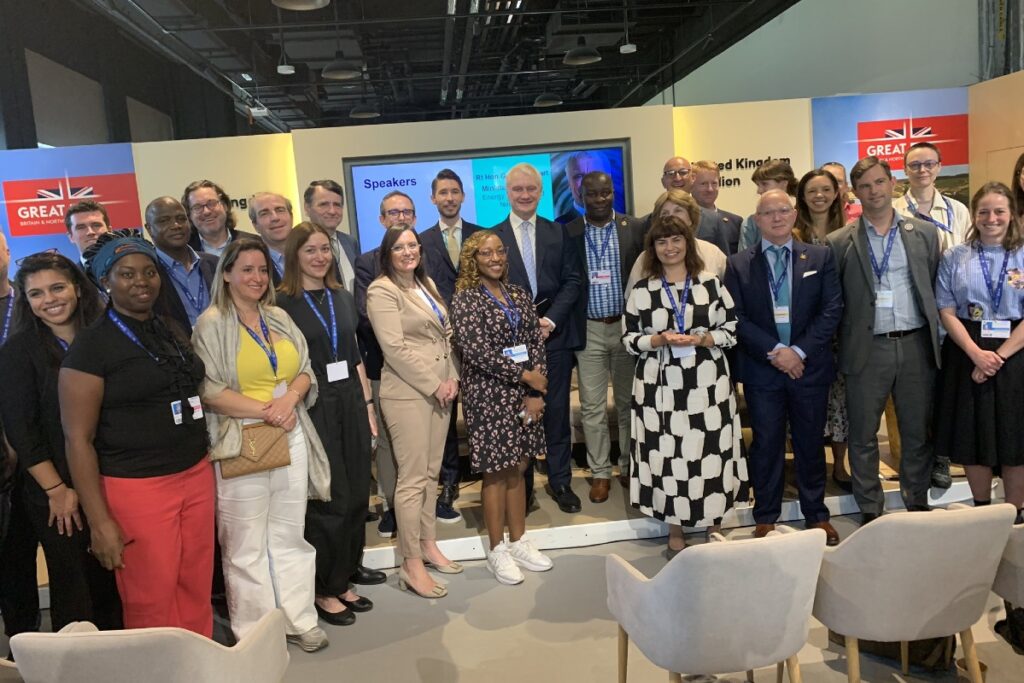
ClimateWorks Foundation’s Deputy Vice President of Programs, Michael Bosse, generously represented CCC at the Sustainable Cooling in a Warming World session hosted by the U.K.’s Mission Innovation. During the event, Michael discussed CCC’s work to bring super-efficient air conditioning to the international market under our Global Cooling Efficiency Accelerator.


Stakeholders gathered for an event on sustainable cooling in a warming world, hosted by the U.K.'s Mission Innovation. (Credit: Graham Stuart MP)
Stakeholders gathered for an event on sustainable cooling in a warming world, hosted by the U.K.’s Mission Innovation. (Credit: Graham Stuart MP)


Other key events included CLASP’s Pathways to Prevent the Dumping of Inefficient Appliances side event, United for Efficiency (U4E) and Cool Ups’ Towards a Market Transformation in Cooling session, the official launch of Climate Resilience for All — a new organization focused on protecting the world’s most vulnerable communities from the impacts of extreme heat — and the Cool Coalition’s Passive Cooling and Nature-Based Solutions for Building Comfort panel discussion.  

During my time at COP28, I was blown away by the number of interesting events taking place, both about cooling and other related topics; too many to attend, unfortunately. However, it was great to meet new people and so many of CCC’s implementing partners, some of whom I hadn’t seen outside a 2-inch square during Zoom calls.

Beyond cooling

While cooling was top of my list at COP28, I wanted to shine a light on some of the other successes of the conference, which was attended by more than 85,000 participants, a significant increase compared to previous years. 

On the very first day of the two-week meeting, an agreement was made on the development of a loss and damage fund, with commitments totaling more than $700 million USD. This was the first time a substantive decision was adopted on the first day of the conference.

Parties agreed on targets for a Global Goal on Adaptation, identifying where the world needs to go to be resilient to the impacts of a changing climate and assessing countries’ efforts.

127 countries signed the Global Renewable Energy and Energy Efficiency Pledge to triple renewable energy capacity and double energy efficiency improvements by 2030. While not directly linked to cooling, this will significantly affect the world’s air conditioners. In support of this work, Mission Efficiency and partners launched a call to action to establish a global target to more than double the rate of energy efficiency improvements annually.

Lastly, within the conference’s final hours, an agreement to “move away” from fossil fuels was reached by negotiators from nearly 200 parties. This is the first time a specific reference has been made to reducing the use of fossil fuels in a UN climate agreement.

Lots to celebrate all around, and this sets us up for more global action over this next year.

The time to act is now

Looking back over the two weeks of COP28, I’m encouraged by what I have seen and heard. As an international community, we are now better equipped than ever to get the cooling sector where it needs to be to ensure efficient, climate-friendly cooling for all. However, as we move forward, it is now vital that we ensure the pledges and commitments made at the conference become more than just words on the page, with timely implementation and ongoing reviews.

The world is no longer warming; it’s boiling. The time to act is now.


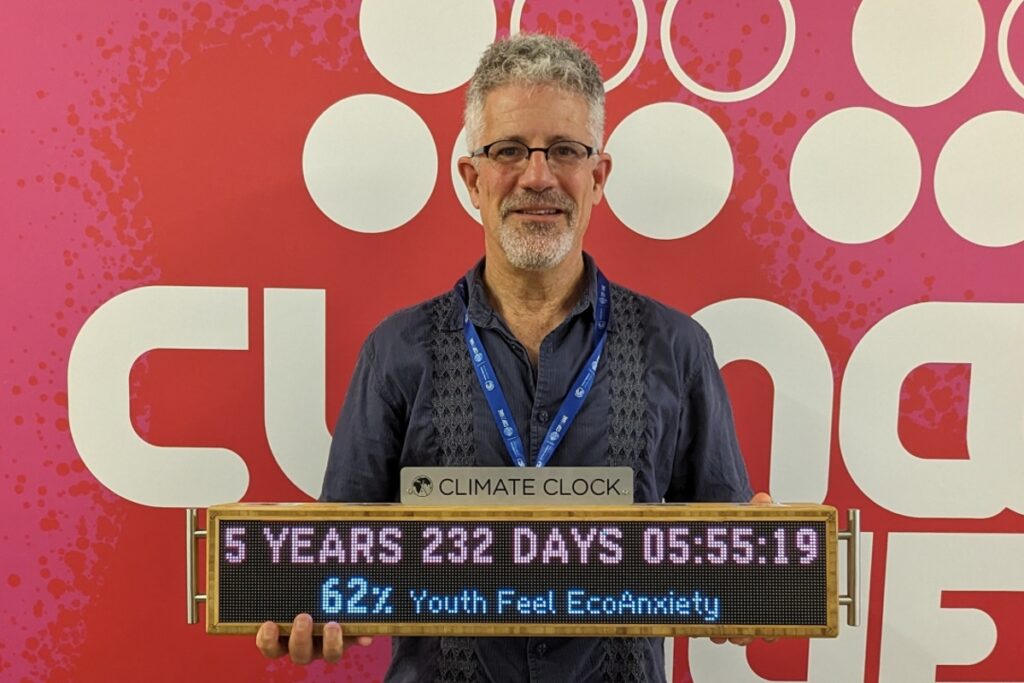
CCC Director Noah Horowitz with the Climate Clock, which shows the time left to limit global warming to 1.5C.


Over the next year, in the run-up to COP29 in Azerbaijan in November 2024, I hope to see more and more countries join the Global Cooling Pledge, and I look forward to seeing how signatories begin to take action to bring sustainable cooling solutions to all.

Rest assured that CCC is committed to keeping cooling at the top of the global climate and development agenda and supporting efforts to improve the accessibility of clean cooling solutions.

Investing in sustainable cooling to protect the planet

On December 2, world leaders gathered at COP28 for the first Summit on Methane and non-CO₂ Greenhouse Gases. This gathering highlighted the importance of tackling super pollutants, including hydrofluorocarbons (HFCs), in slowing warming in the near term to keep climate targets within reach. Our national leaders took a significant step towards delivering on this fast mitigation strategy with the recent decision to nearly double contributions to the Multilateral Fund (MLF) for the implementation of the Montreal Protocol to nearly $1 billion USD over the next three years.

The Montreal Protocol is widely hailed as the world’s most effective environmental treaty, protecting both the stratospheric ozone layer and the global climate. Lesser known is that its financial mechanism, the MLF, is the world’s most efficient source of funding for climate mitigation, costing just $0.07 to $1 per tonne of carbon dioxide equivalent (CO₂e) mitigated, according to a new report.

More funding for the MLF means more opportunity for immediate-term mitigation over the next three years, including new and emerging opportunities for advanced action, lifecycle refrigerant management, and closing loopholes like the feedstock exemption that has allowed for the continued production and leakage of climate and ozone-damaging substances.

Why is this such a worthy investment?

The report, by authors from the Institute for Governance and Sustainable Development (IGSD) and Lawrence Berkeley National Laboratory (LBNL), highlights the efficacy of the MLF as a key to the success of the Montreal Protocol.

Looking back at success, the MLF has already assisted emerging economies in 144 countries to avoid over 51 billion tonnes of CO₂e greenhouse gas emissions since 1991.

Looking ahead, the report by IGSD and LBNL finds that fully funding the MLF could deliver more than 750 million metric tonnes of avoided emissions over the next three years — the equivalent of taking 150 million cars off the road for a whole year. Continued investment in the MLF to phasedown HFCs would avoid more than 30 billion metric tonnes of CO₂e through 2050. Plus, if refrigerant replacement is paired with improved energy efficiency and sound lifecycle refrigerant management, emission reductions could be doubled (or more) with the adoption of best practice policies.

Going forward, the reduced emissions can come at a cost of less than $1 per tonne of CO₂e, a bargain compared to most lower-cost mitigation options in industrial sectors closer to $20 per tonne — nearly 300 times more expensive.

The unique promise of the Multilateral Fund

While other financial channels are focusing on clean energy, maximizing the climate benefits of sustainable cooling equipment is readily achievable thanks to the proven track record of the Montreal Protocol and its effective institutions. The programs employed include replacing refrigerants with low global warming potential substitutes, improving energy efficiency in cooling equipment, and preventing the release of used refrigerants through lifecycle refrigerant management.

This near-doubling of the MLF to $965 million follows through on the commitment made in 2016 with the Kigali Agreement to phase down HFCs while improving the energy efficiency of cooling. Continuing to fully fund the MLF could transform the sustainable cooling sector. The report details potential climate and energy benefits “as among the very best investments for planetary protection and resilience building.”

A warming planet requires even more cooling

Faced with “global boiling,” more and more people will need access to sustainable cooling that doesn’t further warm the planet. This means scaling passive cooling solutions and increasing access to affordable, energy-efficient, and climate-friendly air conditioning and refrigeration. Meeting this need requires transforming the air conditioning and refrigeration sectors. This is one reason that COP28 is being heralded as the “Cooling COP” and will feature the launch of the Global Cooling Pledge on December 5.

Under the Kigali Amendment agreed to in 2016, the Montreal Protocol is now working to enable a transition to climate-friendly cooling that is also more energy efficient. By phasing down the use of climate-polluting HFCs, the Kigali Amendment is putting us on a path to avoid as much as 0.5° C by 2100, in addition to the 2.5° C listed above. The work includes significantly more benefits from improvements in energy efficiency and lifecycle refrigerant management.

For the past three decades, the Montreal Protocol and its Multilateral Fund have been shaping the cooling industry while putting the stratospheric ozone layer on the path to recovery and protecting the climate. It is no surprise when tallying its accomplishments, including phasing out 99% of ozone-depleting substances, putting the stratospheric ozone layer on track to recover by the 2060s, and avoiding as much as 1° C of warming through 2050, that former United Nations Secretary-General Kofi Annan called the Montreal Protocol “the most successful environmental treaty in history.”

Cool COP28: A call for ambitious and urgent action on cooling

Cooling is shaping up to be a hot topic at the 28th UN Climate Change Conference (COP28), which kicks off next Thursday, November 30, in Dubai. According to the COP28 President, Dr Sultan al Jaber, “We have a unique opportunity to deliver a significant collective response to the cooling challenge,” and the time to act is now.

In recognition of the need for urgent and collaborative action on cooling, some 80 cooling-related sessions are scheduled to take place across the two weeks. Not only has the UN Environment Programme’s Ozone Secretariat curated a program full of interesting sessions at its Montreal Protocol Pavilion, but there will also be a number of other cooling events taking place as part of the official COP28 program and at other pavilions.

Top of the cooling agenda is the launch of the Global Cooling Watch report and the Global Cooling Pledge on December 5, the conference’s official Cooling Day.

The Global Cooling Watch report, which will be debuted at a press conference in the UN Climate Change Media Zone at 12:00 pm on December 5, will shine a light on the projected global growth in the number of air conditioners and refrigeration equipment and the additional energy use and related emissions they will cause. It will also detail where we are in terms of the global transition to more sustainable cooling. The report will look at the gap between “business as usual” and the goal of achieving clean cooling for all and identify how we can bridge it. You can watch a recording of the press conference here.

Where the Stocktake looks at the past and present, the Global Cooling Pledge — which will be launched by the COP28 Presidency at a ministerial event at 6.30 pm on December 5 — looks to the future. It calls on governments and other key stakeholders to commit to action on sustainable cooling, such as accelerating the phasedown of HFC refrigerants, developing a national cooling action plan, establishing increasingly ambitious minimum energy performance standards (MEPS) for cooling appliances, and more. We are hopeful that countries will seize the moment by joining the pledge and taking the required actions. The pledge will also be discussed at the press conference. You can watch a recording of the event here.


Innovation

Technological innovation is key if we’re to ensure that everyone has access to the cooling they need without massively raising greenhouse gas emissions. From construction materials and techniques that passively cool our buildings to super-efficient cooling equipment, there are several viable solutions being developed.

District cooling offers a highly efficient centralized solution for built-up urban areas, especially new cities being developed around the world. Join the Cool Coalition and partners at 2.30 pm on December 5 for their event, District Cooling: Delivering A Net-Zero Energy Future and Urban Heat Resilience, at the UNEP Pavilion. You can watch a recording of the event here.

Join Mission Innovation at 11:45 am on December 11 at the UK Pavilion for their Sustainable Cooling in a Warming World event, which will focus on next-generation cooling technologies like the super-efficient room ACs being supported by CCC’s Global Cooling Efficiency Accelerator


Policy

Policy has a crucial role to play in supporting the adoption of efficient, climate-friendly, and affordable cooling solutions. From ambitious efficiency standards and building codes to F-gas regulations and rebate programs, there are a number of policymaking tools available.

Join CLASP and the Ozone Secretariat at 4:30 pm on December 2 at the Montreal Protocol Pavilion for their session: Pathways to Prevent the Dumping of Inefficient Appliances. You can watch a recording of the event here.

On December 9 at 10:45 am, the Environmental Investigation Agency (EIA) will host an event — Accelerating the HFC Phasedown: Examples and Lessons Learned —at the Montreal Protocol Pavilion. You can watch a recording of the event here.


Finance

Financing the transition to energy-efficient cooling for all will require significant investment. Finance for clean cooling will need to come in a range of formats, from funding for demonstration projects and business loans to convert production lines, to consumer finance programs and tax incentives.

Join the Cool Coalition, Clean Cooling Collaborative, and a number of other partners at 9:30 am on December 4 for the Financing Action on Cooling session at the Montreal Protocol Pavilion. You can watch a recording of the event, which featured CCC Director Noah Horowitz, here.

The Montreal Protocol Pavilion will then host an event on financing the food and energy nexus at 10:45 am on December 4. It will be organized by the Global Food Cold Chain Council in partnership with the Cool Coalition and UNEP OzonAction team. You can watch a recording of the event here.


Access

It will not be enough just to develop efficient, climate-friendly cooling solutions. They must be rolled out at scale to ensure those who are heat-vulnerable and need them most have access.

One key way to expand access to sustainable cooling is through passive cooling and nature-based solutions. Join the Cool Coalition and partners at 3.45 pm on December 5 at the UNEP Pavilion for the Passive Cooling and Nature-Based Solutions for Building Comfort session. You can watch a recording of the event here.


Other key events

December 2

December 4

  • Global Collaboration for Innovation and Sustainable Cooling: Solutions for Market Transformation – 11:30 am in SE Room 8 (NRDC, NEDO, and Griha Council). You can watch a recording of the event here.
  • Towards a market transformation in cooling: At the intersection of regulation and financing  – 4:30 pm at the Montreal Protocol Pavilion (U4E and Cool Up). You can watch a recording of the event here.
  • Climate Resilience for All launch – 7 pm, December 4 at the Resilience Hub (Climate Resilience for All)

December 5

  • The Cool Move! Cold Chain investments in emerging markets to reduce Food Loss and waste – 6 pm at the Montreal Protocol Pavilion (GFCCC, the Cool Coalition, the MLF, and partners). You can watch a recording of the event here.

December 6

  • First Movers Country Spotlight on Sustainable Cooling – 11:45 am at the SDG 7 Global South Pavilion (SEforALL and the Cool Coalition)
  • Sustainable Food Systems Futures – 1:15 pm in SE Room 8 (Viet Nam, Columbia University, and SACAU). You can watch a recording of the event here.
  • Energy Efficiency Outlook to 2100 – 2 pm at the Montreal Protocol Pavilion (GFCCC, the Cool Coalition, AHRI, and UNEP Ozone Secretariat). You can watch a recording of the event here

December 8

  • Strengthening the ozone treaty to secure significant greenhouse gas emission reductions into the future – 12 pm at the Montreal Protocol Pavilion (EIA). You can watch a recording of the event here.
  • This is Cool Award Ceremony for Youth Innovators – 2:30 pm at the SDG 7 Global South Pavilion (SEforALL)

December 9

  • Accelerating the HFC phasedown – Examples and Lessons learnt – 10:45 am at the Montreal Protocol Pavilion (EIA). You can watch a recording of the event here.
  • First Movers: Cities Leading from the Front on Sustainable Cooling – 11:30 am at the SDG 7 Global South Pavilion (SEforALL and the Cool Coalition)

December 10

  • Improving rural livelihoods with efficient cold chain and cooling appliances – 9 am at the SDG 7 Global South Pavilion (SEforALL, CLASP, BASE, and the World Bank)
  • Leapfrog to a sustainable agricultural cold chain in low-income economies – 10:45 am at the Montreal Protocol Pavilion (IIR). You can watch a recording of the event here.
  • Cooling a warming world: Sustainable cooling challenges and opportunities in the global south – 11:30 am in SE Room 5 (EIA and CEEW). You can watch a recording of the event here.

A full list of cooling-related events at COP28 can be found here. If you know of any other relevant events that are not included in this list, please email us.

The above includes dates, times, and locations as of the date of the blog release/update. Details are subject to change, and we suggest reaching out to the event organizers or checking the event or pavilion page to confirm.


This is a live document and will be updated as new information becomes available.

Last updated: 12/12/2023

Unlocking the Power of Sustainable Cooling: Energy-Efficient Solutions in Southeast Asia

Over the next two decades, there will be an estimated 300 million air conditioners (ACs) installed across Southeast Asia—a sixfold increase compared to today. This growth in demand for cooling is primarily driven by increasingly hot and humid weather and rising incomes.

Due to the high energy consumption of the average AC unit purchased in the region, a rise in the demand for cooling will likely lead to a significant increase in the demand for energy, particularly at peak times. Unfortunately, because fossil fuels make up 83% of Southeast Asia’s electricity generation mix, more cooling will also mean more greenhouse gas (GHG) emissions.

With the majority of the region’s governments committed to reaching net zero by 2050, how Southeast Asian households choose to cool themselves will play a critical role in the region’s pathway to a sustainable and low-carbon future.

So how can the region reduce its cooling-related energy demand while ensuring people have access to the cooling they need?

Growing demand for cooling

Due to the combination of a high number of cooling degree days[1]A cooling degree day measures how much the mean temperature exceeds the standard temperature each day over a given period. and low AC ownership, Southeast Asia has one of the highest needs for cooling in the world. With only 15% of households in the region owning an AC[2]Access to cooling is not equal across the region, with almost 80% of households in Singapore and Malaysia having an AC, compared to less than 10% in Indonesia, the Philippines, and Vietnam. (IEA), there is significant potential for future growth. In fact, by 2040, Residential AC ownership is projected to increase to 60%, with nearly two AC units per household.

Because of this rising demand, it’s no surprise that space cooling is the fastest-growing use of energy in the region’s buildings. Energy use for ACs in Southeast Asia has already increased by 750% over the last 30 years, and it will continue to rise. Within the next two decades, cooling will account for almost 19% of the region’s electricity consumption, up from just 8% in 2017—reaching an expected 30% at times of peak demand. The surge in cooling demand during peak times threatens the region’s power grids and its transition to renewable energy.

In addition to the sheer number of AC units projected to be installed, the (in)efficiency of said units will significantly impact energy demand, with the region’s average AC being less than half as efficient as its best available technology.

Minimum energy performance standards (MEPS) are an effective policy tool that improves the efficiency of a market’s AC units each time the standard levels are raised. Energy labels also help encourage the uptake of better technologies.

While more efficient appliances are readily available in the region and are competitive on lifecycle costs, non-existent or ineffective labeling programs mean these models are not consistently recognized as the more efficient option. For example, in many countries in Southeast Asia, most ACs fall under the top efficiency label due to its wide scope, so consumers are not able to easily identify the best models.

Enhancing regional cooling efficiency

While national standards and labeling programs already exist in the region, the level of attention paid to energy efficiency as a strategy and the maturity of said programs—in terms of their design and implementation—varies by country.

Since 2021, Clean Cooling Collaborative (CCC) has supported a group of implementing partners—including United for Efficiency (U4E), Lawrence Berkeley National Laboratory (LBNL), and the International Institute for Energy Conservation (IIEC)—that have been working collaboratively with the ASEAN Centre for Energy (ACE) and its member countries. This work explores more ambitious and impactful revisions to the existing regional MEPS for ACs based on U4E, LBNL, and IIEC’s expertise and knowledge of global best practices.

Recommendations from the group include an aligned metric for both fixed- and variable-speed ACs and a two-phase, accelerated adoption timeline. These steps would put the region on a pathway to subsequently implement MEPS at a level that is in line with the best standards in the world. Leaders endorsed both recommendations during the 39th ASEAN Ministers on Energy Meeting in September 2021.

Our partners in Singapore have been aggressive in pursuing these recommendations and announced in March of 2023 that they would adopt the Regional Phase II MEPS for ACs. As the first in the region to commit to the new MEPS, we will work closely to learn from their adoption process and see how it can inform our work with other countries.

Over the coming years, we will continue to support efforts in Southeast Asia with plans to advance regional collaboration as well as work in some key member countries, namely Singapore, Malaysia, the Philippines, and Vietnam. Here we aim to support the technical analysis needed to develop, propose, and implement the new MEPS for ACs.

While Indonesia and Thailand are the biggest untapped markets for efficient AC technologies, recent analysis has identified Singapore and Malaysia as the most likely to be early adopters of ambitious MEPS and could motivate other countries to follow suit. Similarly, our research indicates that Indonesia is not currently in a position to enhance its MEPS due to recently updating its AC standards. CCC has plans to assess whether Indonesia will be ready to revisit its MEPS in the coming years. Our implementing partner CLASP has also recently completed a labeling update in Thailand

Beyond energy efficiency

While the impacts of improving the efficiency of the region’s ACs can’t be underestimated, this work alone is not enough to solve the cooling challenge facing Southeast Asia. A more holistic approach is needed.

Scaling up the adoption of passive cooling solutions in the region can also help reduce the demand for mechanical cooling while still providing thermal comfort to those who need it. For example, in Indonesia, applying a reflective coating to roofs—known as a cool roof—has proven to reduce indoor temperatures by up to 20° F (11° C). Other passive cooling solutions include using nature to mitigate the urban heat island effect and implementing building codes to help ensure buildings are energy efficient and naturally cool. Examples of this work can be seen in Vietnam and Cambodia.

To minimize cooling’s impact on Southeast Asian countries’ energy transition and climate and development targets, the adoption of sustainable solutions must be scaled up across the region. More stringent performance standards and labeling programs, as well as passive cooling solutions, would significantly reduce cooling-related energy demand, GHG emissions, consumer utility bills, and infrastructure investments.

However, the realization of these benefits will require governments, investors, manufacturers, and other stakeholders to rapidly implement policies and initiatives that support the development and adoption of sustainable cooling solutions.

Smart cooling solutions: Exploring the role of demand-side management in China

Although China is no stranger to hot summers, last year’s unprecedented heat wave was something it didn’t see coming. Over two months, more than 900 million people in 17 provinces were affected by the relentlessly high temperatures.

As they turned to their air conditioners (ACs) to escape the heat, they found little relief thanks to power outages as demand outstripped supply. This is despite China having the world’s largest installed power capacity, with both coal and renewables.

The long-lasting heat wave created the perfect storm where a surge in cooling demand – which can account for as much as 50% of China’s electricity consumption in peak times – coincided perfectly with a drought-induced shortage of hydropower generation and limited solar energy due to residential cooling demand peaking in the evening.

To reduce electricity demand, factories were forced to close and subways, airports, and hospitals had to shut off their electricity for hours if not days. Residential water supplies were also affected. It’s estimated that the outages cost China’s economy $10 billion and resulted in a 0.5% decline in GDP. This was at a time when the country was still struggling with ongoing Covid-19 restrictions.

Many Chinese cities turned to their coal-fired power plants to boost electricity supply during periods of peak demand. Similarly, many businesses across the country, forced to shut off their electricity supplies during these periods, turned to diesel generators to keep operations going.

As China – and many other parts of the world – works towards net-zero emissions, reliance on fossil fuels to meet peak demand for cooling is a counter-productive and unsustainable long-term strategy.

Managing cooling demand

To date, most of China’s efforts to mitigate this problem have focused on supply-side interventions, such as expanding renewable energy generation and adopting the world’s most stringent efficiency standards for room ACs. However, last summer’s blackouts suggest that China could also benefit from balancing the equation from the other side.

Demand-side management (DSM) involves working with consumers and incentivizing reduced energy use. This approach is typically used during times of high demand but can also help reduce overall energy consumption.

In China, researchers, utility companies, and local governments have supported DSM with the aim of improving energy security.

The Chinese government has already developed DSM plans that would cover 3–5% of the country’s electricity consumption, mostly from industry and cooling in public sector buildings. However, little has been done so far to engage the largest source of China’s cooling demand – the residential sector, where hundreds of millions of ACs could be turned down or off for a short period during peak demand without necessarily reducing residents’ comfort levels.

In addition to helping prevent future power outages, better demand-side management could reduce greenhouse gas emissions, support the clean energy transition, and avoid high utility bills and investments. In fact, reducing demand through consumer engagement could secure savings of $40 billion over ten years in China. The widespread adoption of DSM initiatives could also boost citizen engagement in climate issues.

Despite the significant potential of DSM, there is still much work to do to make it a viable and successful strategy in China.

Huzhou DSM pilot

The Clean Cooling Collaborative has partnered with Energy Foundation China (EF China) to develop a scalable model for energy-efficient, climate-friendly cooling and innovative DSM business models. To test out the concept of demand-side management for cooling in China, EF China is collaborating with Zhejiang University of Technology (ZUT) for a pilot project in Huzhou, in the eastern province of Zhejiang. 

Due to the region’s hot and humid summers, and high level of AC ownership, the local grid has always struggled to meet the surge in demand for AC at peak times, even with substantial solar and wind power generation capacity.

“In Zhejiang, cooling can account for almost 40% of electricity peak demand in summer,” explains Dr. Jiaqian Chen from State Grid Zhejiang Electric Power Company, Ltd. “If cooling DSM was adopted by just one in five users, we could achieve up to 8% grid flexibility, i.e., the whole electricity peak load can be reduced by 8%.”

The pilot, a first of its kind in China, started with about 300 volunteer households across the city. Participants were given a Wi-Fi-enabled plug-in for their AC that allows them to change appliance settings remotely via a smartphone app.

The app enables users to actively monitor the electricity consumption of their AC and adjust its temperature or turn it off to see real-time energy savings. Users can see how much energy they’ve saved and the associated emissions reductions. 

Depending on how the program is developed, the app could enable enhanced interaction with utility companies and integration with the municipal government’s Carbon Talent Platform, which is hosted by Alipay – one of China’s most popular mobile finance and social apps.

Platform users could get “green credits” by participating in the DSM program and exchange them for gifts or a discounted electricity rate. The incentive mechanism is designed to help attract more participants. Currently, AC users will be able to take part in the program without sacrificing indoor comfort by actively controlling their AC use based on their real-time needs, grid instructions, electricity prices, and updated credit award policies.

Over the coming year, there are plans to expand the pilot project to tens of thousands of Huzhou residents. The aim is to make the energy and emissions reductions more meaningful from the city’s perspective and mobilize more support from the municipal government and utility companies. 

A rough estimate suggests that if Huzhou’s 3 million residents participated in the program, it could save nearly 1 million tons of CO₂ emissions, about 300 kg per person per year. That is roughly 4% of China’s per capita emissions.

“With the market for internet-connected ACs growing quickly, we are working with our partners to promote energy and COemission reductions through citizens’ behavior,” says Tan Zheng, Industry Program Officer at EF China. “According to the State Grid Zhejiang Electric Power Company, the province can reduce its AC load by up to 7.3 million kW and 2.9 million kW, respectively, if AC temperatures are set at regulated temperatures of 26° C [78.8° F] in summer and 20° C [68° F] in winter.”

What next?

While this pilot could offer valuable science-based experiments and insights into the potential of demand-side management in China, more research is needed to better understand the climate, social, and economic effects of DSM measures. This will help shed light on how to successfully engage more cooling consumers in the residential sector. 

With ongoing reforms to China’s energy market, a demand-based electricity pricing structure – rather than its current fixed price for residential users – could also help motivate participation in demand-side management programs.

This is a new work area for many stakeholders in China, including funding and implementing partners, policymakers, and utility companies. While there is much to learn, we expect to gain more valuable insights from our partnership with EF China in the coming years.

We will continue to work closely with local partners to help them reduce emissions from one of China’s largest sources without compromising the quality of life of its 1.4 billion residents.