
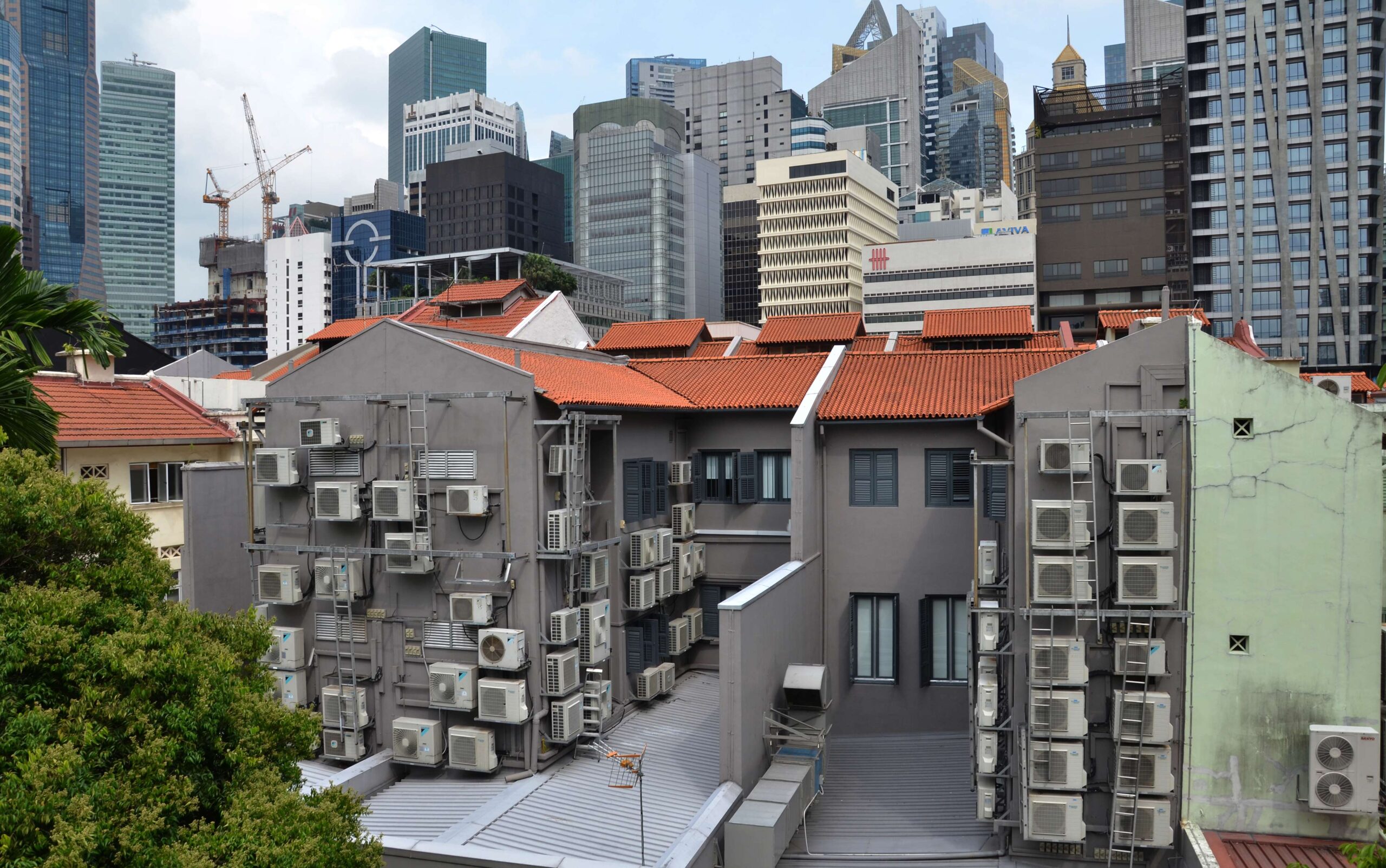
Late may be better than never for holding COP26, but action on cooling cannot wait any longer.

As global temperatures rise, there’s increased urgency to curb greenhouse gas (GHG) emissions while also building resilience to our warming world. Action on cooling is a vital part of both these tasks, and the time to act is now. But how can stakeholders support the global transition to efficient, climate-friendly cooling? 

It’s been almost two months since I joined the team here at the Clean Cooling Collaborative, and what a few months they’ve been! To say it’s been a whirlwind is definitely an understatement. When I first started, the organization was still known by its previous name the Kigali Cooling Efficiency Program (K-CEP) and the team was busy helping to wrap up the program’s Phase I projects and producing their 2017-2021 impact report. It was great to look back over the past four years, tabulating the significant impact of K-CEP and celebrating the countless achievements of the team and its implementing partners. But now it’s time to look ahead to continue this great work and secure new, meaningful, and urgent action on clean cooling. 

Why act on cooling?

According to the World Meteorological Organization (WMO), 2020 was 1.2°C hotter than pre-industrial temperatures, which is getting dangerously close to the internationally-agreed ambition to minimize global warming to 1.5°C. In addition, the frequency, duration, and intensity of extreme heat events are on the rise, as are many other impacts of the climate crisis. Less than 100 miles from where I live in California, countless communities have fallen victim to an unprecedented number of large forest fires, with similar occurrences happening all across the globe, from Australia to Greece, and Turkey to Canada.

It’s becoming increasingly clear that we are in much need of bold action, and what better occasion to commit to such action than the 26th United Nations Climate Change Conference (COP26), which starts in just under four weeks.  

Following a year-long delay of the conference due to Covid-19, there’s been growing pressure on governments and other stakeholders to make ambitious climate commitments and to follow through on pledges with timely action. And in our opinion, this must include meaningful action on cooling, which is currently responsible for around 10% of global GHG emissions. Emissions from the sector are expected to rise with the growing demand for cooling, as 3 billion additional new room air conditioners (ACs) are projected to be in use by 2050. As we see this growing demand, ensuring equitable access to clean cooling solutions is vital for climate mitigation and building resilience to our warming world.

Not only does transitioning to efficient, climate-friendly cooling on its own have significant emissions reductions potential, it’s also necessary to help accelerate the transition to clean energy. By significantly boosting the efficiency of cooling appliances, we can dramatically cut energy demand, reducing the strain on our power grids on hot days and minimizing the need for fossil fuel-based peaker plants. This shift would make the transition to a clean grid faster and cheaper. 

As we near COP26, it’s promising to see momentum building around efficient, climate-friendly cooling. We’ve recently seen a few of cooling’s major players ratify the Kigali Amendment an international agreement to phase down the use of super-polluting hydrofluorocarbons (HFCs) announce their intention to do so, or take equivalent action (like here in the United States). There’s also been an impressive number of countries including commitments to efficient, climate-friendly cooling in their enhanced Nationally Determined Contributions (NDCs), which detail each country’s plans to reduce their national GHG emissions in line with the Paris Agreement. As of early August, 37 submitted NDCs (representing 63 countries) included commitments on cooling, with at least four more countries (Burkina Faso, Jordan, Pakistan, and Tunisia) signaling they will include action on cooling in their NDCs as part of our NDC Support Facility. On top of all of this, there’s lots happening to significantly boost the energy efficiency of cooling appliances, as seen in the Global Cooling Prize and in the Super-Efficient Appliance Deployment (SEAD) Initiative’s recent call to double the efficiency of  new ACs and refrigerators.

With all that said, we still have a long way to go to secure the action needed to limit global temperature rise to 1.5°C and avoid a climate and development disaster. At least 45 countries have yet to submit their enhanced NDCs, around 71 countries still need to officially ratify the Kigali Amendment, and only 11 major cooling manufacturers (of 54) have joined the Race to Zero, which requires signatories to commit to emissions reductions in line with the Paris Agreement. 

The time to act is now

While we firmly believe that all stakeholders should always be working to minimize their impact, major events like COP26 provide an occasion to demonstrate leadership and encourage collective action. We hope to see both at this year’s conference. But how can different stakeholders support the global transition to efficient, climate-friendly cooling?

National governments need to be committing to and implementing clean cooling policies like adopting ambitious minimum energy performance standards (MEPS) to improve the efficiency of cooling appliances; ratifying the Kigali Amendment to cut the use of super-polluting HFCs; developing National Cooling Action Plans (NCAPs) to ensure more equitable access to life-saving cooling solutions; or funding research and development (R&D) to support the urgent development and adoption of high-performing technologies. Furthermore, by including such policies in national commitments like NDCs, countries can demonstrate their ambition on the international stage and encourage other countries to follow suit. Global action is paramount to global success. 

Local governments also have an important role to play by making our cities, states, and provinces more sustainable through localized policies. Building codes can ensure that homes, offices, and schools are energy efficient and kept cool with passive solutions like cool roofs. More thoughtful urban planning like tree cover, green spaces, and water features can minimize the urban heat island effect. Local cooling or heat action plans are also a vital tool for regional governments to pull together the various elements that can help an area adapt to climate change, protect its citizens (particularly the most vulnerable communities), and minimize cooling’s climate impact. 

The private sector, in terms of both the suppliers and consumers of cooling, also needs to commit to and enact change. Cooling manufacturers are encouraged to join the race to zero by developing long-term emissions reductions plans, which should include the conversion of product lines to significantly improve the efficiency of their appliances and transition to refrigerants with ultra-low global warming potential (GWP). They also need to invest more in R&D to speed up this transition. Organizations that consume large amounts of cooling, such as supermarkets and refrigerated warehouses, can commit to the transition through their purchasing decisions, for example by choosing clean cooling equipment over polluting alternatives.

And finally, financial institutions can show their commitment by directly investing money in programs that will improve the affordability and accessibility of efficient, climate-friendly cooling, such as cooling-as-a-service business models, on-wage financing schemes, or leasing programs.

What next?

Even more important than securing such commitments, is ensuring that stakeholders are held accountable to their pledges and urgent action is taken to implement changes. There’s no merit in committing to change if the steps aren’t taken to actually make the change. 

I’m optimistic that COP26 will be a success and that cooling will be one of the sectors actively discussed. I’m also confident that it will be just the start of what’s to come in terms of both commitments and meaningful action.

This is the first post in a short series of blogs in the run up to (and during) COP26. In it, we will be looking at some of the topics that are at the top of our list. You will hear from a few of the Clean Cooling Collaborative team, as well as some of our wise implementing partners. Keep an eye on our Twitter for the latest posts.

Celebrating the successes of the Kigali Cooling Efficiency Program

In 2016, leading climate foundations collaborated ahead of the Montreal Protocol meeting in Kigali, Rwanda, and pledged more than $50 million to create the largest-ever fund of its kind for action on efficient, climate-friendly cooling. The following spring, the Kigali Cooling Efficiency Program (K-CEP) was born, under the management of a new secretariat assembled by and housed at ClimateWorks Foundation.

In the four year since then, K-CEP has grown from a bright idea to a thriving program that has achieved significant and measurable results. In addition to securing sizable greenhouse gas emissions reductions, the program has helped place cooling on the global agenda, shining a spotlight on an issue that was often overlooked in terms of both its human impact and mitigation potential.

Impact event highlights

Today we came together with our funding partners and implementing partners to celebrate the successes of our collective efforts of the last four years and to launch our 2017-2021 (i.e., ‘K-CEP Phase I’) impact report – Scaling up clean cooling for all. In addition to estimating the emissions reductions and cost savings of our network’s actions, the report looks at the wide range of accomplishments we have made since 2017 to support the global transition to efficient, climate-friendly cooling.  

We are excited to report that through the hard work of our team and partners, we expect to secure 4.2 gigatons of avoided CO2 emissions by 2050, with 2.4 Gt CO2 emissions reductions already locked in. In total, this represents $960 billion in cost savings over the same period. Theses significant impacts have resulted from meeting a range of ambitious milestones, including but not limited to:

  • Making direct investments to advance efficient, climate-friendly cooling in 57 countries.
  • Mobilizing the investment of over $600 million in public and private finance to steer consumers and institutions toward more efficient, climate-friendly cooling products.
  • Supporting the proposal, adoption, or implementation of 21 cooling appliance standards around the world. 
  • Developing a network of more than 54 partner organizations, 99 business partnerships, and more than 100 Cool Coalition partners to drive change in the cooling sector.
  • Influencing the integration of cooling into comprehensive national climate policies.

Read more about our K-CEP Phase I impact report in our recent press release, here.

Today’s event gave some funders and other stakeholders a chance to reflect on their time working alongside K-CEP. It was heartening to hear such encouraging sentiments from so many dear colleagues. We look forward to many more years of meaningful and impactful collaboration!

As per tradition, we also used our annual meeting to give some well-deserved recognition to a few of our grantees and partners. While we wish we could give awards to all of our partners and grantees, this year’s winners were:

Introducing the Clean Cooling Collaborative…

We also took today’s event as an opportunity to share a few big announcements with our network of partners and funders. In addition to introducing and welcoming our new director, Noah Horowitz, we also launched our new name – the Clean Cooling Collaborative

As the first phase of the program comes to an end and focus shifts beyond cooling efficiency, we thought now was the right moment to refresh our brand, aligning it to the more comprehensive approach we will be taking as we move forward. We feel that this new identity better reflects our growing role in building a global coalition that works across policy, finance, and industry to decarbonize the cooling sector worldwide. 

Continuing to work in partnership with the global cooling community that K-CEP helped to establish, as well as embracing new strategic collaborations, we, as the Clean Cooling Collaborative, are looking forward to carrying on K-CEP’s Phase I legacy of ensuring efficient, climate-friendly cooling for all.
Read more about this transition in our recent press release, here.

Enhanced NDCs feature crucial solution for turning down global temperatures

Though we’re not yet halfway through 2021, it’s already shaping up to be a banner year for tackling climate change – politically, financially, and socially. Any consumer taking in the tidal wave of climate news will be able to cite numerous examples of action and yet science demands more action to keep warming below 1.5°C. Thankfully more is coming.

One of the most critical goals to achieve in 2021 is an enhanced Paris Agreement, which means negotiating issues like carbon markets, finance, and reporting, but perhaps more significantly, updating Nationally Determined Contributions (NDCs) for climate mitigation and adaptation. NDCs are a fundamental component because they detail the targets, policies, and measures governments aim to implement over the next five years. Each country must submit an updated NDC to the UN by COP26 in November this year.

While most parties are still working on enhancing their plans, 81 countries (as of May 1) have already updated their NDCs or submitted entirely new ones. And to that we say ‘Bravo!’. Even more exciting (in our eyes) is an emerging trend that we’re seeing in these recently published NDCs, one that has huge mitigation potential. Currently, this mitigation potential is roughly 7% of global greenhouse gas (GHG) emissions, although this is expected to double by 2050 if left unchecked. Not only does this trend have the potential to avoid a sizable chuck of global emissions, it’s also critical for adapting to the warming climate and delivering multiple Sustainable Development Goals (SDGs) relating to health, nutrition, productivity, and education.

So, what is this trend? Well, it’s quite simply committing to the adoption of or transition to energy-efficient, climate-friendly cooling solutions. So far, 22 NDCs – representing 48 countries – have featured cooling commitments or reference to it, with at least seven countries signaling they will include action on climate-friendly cooling in their NDC when they go to print.

new briefing paper from the Kigali Cooling Efficiency Program (K-CEP) summarizes the state of play and includes 10 case studies of published or planned NDC enhancements featuring climate-friendly cooling. This work is being done as part of K-CEP’s NDC Support Facility for Efficient, Climate-Friendly Cooling, which was set up to help developing countries that are committing to take action on cooling in support of the Paris Agreement. The brief goes on to give an overview of 45 additional countries (including the 27 members of the European Union) that have already included climate-friendly cooling in their enhanced NDCs in some form.

Government action on efficient, climate-friendly cooling

While most governments tend to focus on the supply side of the energy transition and shifting from fossil fuels to clean power, many of these 55 countries have recognized the need to also look through the other end of the telescope, managing energy demand as well as the use of refrigerants that have a high global warming potential (GWP). They have understood that energy supply is just a means to an end, not the end itself, and that it is the benefits we receive from energy, such as cooling, that matter. The more efficiently we can deliver these benefits in terms of energy supplied for benefits produced, the cheaper the cost of the energy transition will be and the quicker we can do it. The Economist Intelligence Unit recently quantified these cost and time reductions and estimated that efficient cooling (in appliances and buildings) can save $3.5 trillion by 2030 and take eight years off the transition to net zero.

Making our cooling more energy efficient can be achieved at the product level, like in air-conditioners (ACs) and refrigerators, or at the system level, such as buildings, cities, and grids. Enhanced NDC commitments on cooling reflect the different entry points for efficient cooling. For example, Nigeria, Morocco, Tunisia, and Pakistan will be focusing on more stringent Minimum Energy Performance Standards (MEPS) for ACs and refrigerators, while Cambodia, Vietnam, Burkina Faso, and Jordan will be upgrading their public buildings and cities. Alternatively, Ethiopia and Chile are focusing on industrial cooling.

In parallel with NDC enhancements, 118 countries and the European Union have now also ratified the Kigali Amendment to the Montreal Protocol, which aims to reduce the production and use of super-polluting hydrofluorocarbons (HFCs), 86% of which are accounted for in cooling equipment (in GWP-weighted tons CO2-eq terms). Better alignment of these two regimes (i.e., the Paris Agreement and the Kigali Amendment) will help countries to reduce emissions from cooling faster and more cost-effectively.

Cooling our warming world

As we ‘build back better’ we also need to ‘build back cooler’, ensuring that cooling equipment and appliances, as well as buildings, are net zero, and that the recovery from the Covid-19 pandemic also focuses on cooling our warming world. In doing so there are huge opportunities to address racial and social equity challenges by reducing the cost of cooling for low-income consumers, retrofitting buildings for comfort and health, and making public spaces ‘cool havens’ to provide respite from the heat waves that challenge our way of life more and more each year.

With the publication of the COP26 High Level Champions’ Climate Action Pathway to Net-zero Cooling, we know how to get to net-zero cooling – passive buildings, super-efficient equipment and appliances, and ultra-low (< 5) GWP refrigerants – but now we have to ensure the necessary actions are taken to get us there.

Enhanced NDC commitments on cooling are an important step in the right direction on this sectoral pathway. The benefits are clear. Of the 189 parties that have joined the Paris Agreement, the majority still need to submit enhanced NDCs by COP26 this November, and many need to ratify the Kigali Amendment. Taking ambitious action on both fronts would provide a valuable opportunity to realize the full mitigation potential of energy-efficient, climate-friendly cooling.

The recent announcements from the U.S. and China – namely their Joint Statement Addressing the Climate Crisis (including the phasedown of HFCs), both countries’ decision to ratify the Kigali Amendment, and the United States’ enhanced NDC and American Innovation and Manufacturing (AIM) Act – has puts some serious wind under the wings of the Kigali Amendment, its significance in geopolitical terms, and what it means for the cooling industry overall. That said, more emphasis is needed on cooling more broadly, such as appliance efficiency standards. A renewed spotlight on the efficiency of cooling appliances, building design, and the HFC phasedown as a complete suite of critical climate solutions simply can’t come soon enough. Temperatures are rising and the clock is ticking for people and planet.

***

Governments interested in enhancing their NDCs with action on climate-friendly cooling please email us.

K-CEP work highlighted in Apolitical’s 100 Climate Policy Breakthrough list

Earlier this week, Apolitical released their 100 Climate Policy Breakthrough list, which showcases climate policies that have demonstrated the potential for scalability and effective change. The list aims to provide policymakers with an overview of how meaningful climate policy at the local, national, and global level can help reduce greenhouse gas emissions. The list is made up of policies implemented over the last few years and offer an example of “public service at its innovative and inspiring best.”

Of the 100 featured policies, nine focused specifically on cooling and four were projects from the K-CEP community. The policies covered a range of aspects of cooling, from passive cooling and behavior change campaigns, to finance programs and efficiency standards.

“It’s clear that we cannot solve the climate crisis without addressing cooling,” said K-CEP Executive Director, Jessica Brown. “K-CEP, our partners, and the wider climate action community are making great strides to ensure that efficient, climate-friendly cooling is realized as a major climate mitigation strategy.”

By transitioning to efficient, climate friendly cooling, not only can we improve the lives of millions of people, but we can also cut global warming and secure huge financial savings.

We’re proud to see the work of K-CEP partners being recognized in Apolitical’s 100 Climate Policy Breakthrough list:

Million Cool Roofs Challenge

The Million Cool Roofs Challenge is a global initiative aiming to accelerate access to affordable, sustainable cooling through rapid deployment of cool roof materials. The challenge is a collaborative effort from K-CEP, the Global Cool Cities Alliance, Sustainable Energy for All (SEforALL), and Nesta Challenges.

The project has given $100,000 grants to ten teams to deploy cool roofs in their country. An addition $750,000 will be awarded to the team that has demonstrated the best sustainable and transferable model for rapid deployment of cool roofs.

Rwanda’s ‘Coolease’ Scheme

Rwanda’s ‘Coolease’ finance program, one of the first of its kind in Africa, will enable suppliers and consumers of air conditioning and refrigeration products to transition to the latest technology without the high upfront investment.

Funded by K-CEP in conjunction with UNEP and BASE, Coolease embraces the concept of ‘cooling as a service’ (CaaS), in which consumers effectively rent cooling appliances from technology providers. The providers are responsible for installation and maintenance of the equipment, which they can remove if the lessee defaults on payments. The policy transfers responsibility for efficient systems to the provider, making it easier and cheaper to replace old models. It also combats the challenge of high initial costs, making it easier for consumers to choose more climate-friendly option, in turn reducing the cooling sector’s greenhouse gas emissions and increasing access to efficient, climate-friendly cooling.

Efficient Cooling Standards in Kenya

The Kenyan government is working with K-CEP and CLASP to enact strong minimum performance requirements for refrigeration and air conditioning products to try and mitigate their climate damaging effects as the market grows over the next decade.

In April 2019, the performance standards came into effect, requiring an improved efficiency level of at least 11% and a regulation of ozone-damaging hydrofluorocarbons (HFCs). The new standards are expected to eliminate 73% of the least efficient air conditioner models from the market. The regulations are already showing a strong positive effect on the import market.

Nature-Based Cooling in Medellín

Medellín’s ‘Green Corridor’ project targets air pollution, the urban heat island effect, and public transport with one solution: nature. The increase of green space has benefited the local economy through training and job creation, and public health outcomes from reduced air pollution and improved mental health. The city has seen temperatures fall by 2-3°C, ensuring significant energy reductions from reduced artificial cooling. So far, they’ve planted over 8,300 trees and 350,000 shrubs.

The other cooling policies include:

  • The Global Cooling Prize: The Global Cooling Prize has the goal to find a cooling solution that will mitigate 0.5°C of global warming by 2100.
  • NYC’s CoolRoofs Program: The NYC CoolRoofs program has coated over 10 million square feet of rooftop with reflective coating, reducing cooling costs, greenhouse gas emissions, and the urban heat island effect.
  • Sydney’s Road to a Cooler City: Sydney is combatting the urban island heat effect by focusing on cooling its streets. The lighter road surfaces have the potential to decrease surface temperatures by as much as 14°C.
  • The CoolBiz Campaign: The CoolBiz campaign is reported to save between 1 and 3 million tons of CO2 every summer in Japan by encouraging small changes in behavior to reduce the need for mechanical cooling.
  • Delaware’s Cool Switch: Delaware’s proposed ‘Cool Switch’ policy incentivizes non-residential consumers to switch to low-impact methods of refrigeration.


Image source: Ashden

Reducing food loss and increasing farmers’ income: Supporting efficient, climate-friendly agricultural cold chain in India.

The United Nations Environment Programme (UNEP), with support from K-CEP, is announcing a new initiative that will mobilize $50 million for efficient, climate-friendly agricultural cold chain in India. This work will be conducted in partnership with the Alliance for an Energy Efficient Economy (AEEE) and Energy Efficiency Services Limited (EESL).

Food loss in India

In India, rising temperatures and extreme heat pose a significant threat to food and nutrition security, as well as public health in general, highlighting the importance of access to cooling for all.  The risk of food and nutrition insecurity is further exacerbated by a shortage of reliable and unbroken cold-chain infrastructure (e.g., cold room storage, refrigerated transport, etc.) across the country.

According to a 2012-2014 study by the Indian Council of Agricultural Research (ICAR), up to 6% of cereals, 6.1% of pulses, 10.1% of oilseeds, 18.1% of fruits, and 13% of vegetables were lost during harvest, post-harvest activities, handling, and storage. Overall, it is estimated that post-harvest losses in India total around $12.4 billion each year.

Not only do these losses negatively impact farmers’ incomes and food security, but they also result in a waste of many natural resources, such as soil quality and water, and contribute a significant amount of greenhouse gas (GHG) emissions.

Agricultural cold chain in India

By investing in the development of agricultural cold chains, UNEP, AEEE, and EESL aim to reduce food loss, ensure greater nutrition and food security, and improve farmers’ income and rural livelihoods in India. All of which are key development priorities of the Indian government.

While the expansion of cold chains will reduce food loss and its associated GHG emissions, conventional cold chain infrastructure consumes huge amounts of energy, uses climate-polluting refrigerants, and relies on fossil-fuel intensive vehicles for transportation. This expansion is crucial for India’s development and to reduce food loss, but it is paramount that efforts ensure cold chain expansion prioritizes sustainable energy and refrigerants and delivers resilience and economic benefits for farmers and other food producers.

UNEP, AEEE, and EESL will work in India’s rural and peri-urban areas to mainstream efficient cold chain infrastructure that uses renewable energy supplies and refrigerants with low global warming potential (GWP). In addition to piloting innovative and replicable technologies and participatory business models that maximize value for farmers, the project will also work on enhancing policy and support programs and creating economic activities and new job opportunities in rural India.

Due to the Covid-19 pandemic and the upcoming roll-out of a vaccine, significant work on medical cold chains is already underway in India. While this project will focus predominantly on the agricultural cold chain, yielding both climate and development benefits, there is strong potential to integrate medical cold chain, particularly during the next few years. As such the project will explore the potential for rural stores, packhouses, and transportation to play a role for both vaccine and produce.

The project will kick-off in early 2021 and will run until early 2024.

New Report: Efficient cooling in EVs can extend driving range, reduce operating costs, and cut emissions.

Cooling: Transporting us to Net Zero

How efficient, climate-friendly cooling can support the transport sector’s transition to net zero emissions.

In 2018, the IPCC announced that to limit global warming to 1.5°C, global CO2 emissions would need to fall by about 45% from 2010 levels by 2030, and reach ‘net zero’ by around 2050. In practice, this would require all sectors to shift away from fossil fuels while also removing CO2 from the atmosphere.

For the transport sector, most emissions reductions will likely come from on-road passenger transport, which is easier to decarbonize than aircraft and freight ships. If the electricity that charges an electric vehicle (EV) is generated from renewables, driving a fully electric vehicle would produce no emissions post-manufacturing. But concerns over cost, range, and charging infrastructure are preventing mass uptake by consumers. At the core of the problem lies the vehicle’s battery and its range.

According to a new report from the Economist Intelligence Unit (EIU) – Cooling: Transporting us to Net Zero – more efficient cooling can extend the driving range of electric cars and trucks by 38% and reduce operating costs by 28%. It is estimated that these cost savings could drive a 7% uptick in EV sales. The research also points out that further improvements can be realized with the use of passive cooling measures such as smarter design and insulation.

In China, efficient cooling in EVs has the potential to cut emissions by 58MtCO2 over the next decade. Of the emissions that could be avoided in China, 72% would have been from coal-fired generation, 22% from oil, and 5% from gas.

“The transition to EVs can offer consumers an intelligent, stylish, and climate-friendly driving experience, but it also needs to be comfortable and convenient,” says K-CEP Non-Executive Director, Dan Hamza-Goodacre. “This EIU report shines a light, for the first time, on the role that efficient cooling can play in extending EV range and reducing costs while keeping passengers and cargo cool. The climate also wins. I hope the automotive industry can act on the findings, and that MPG and range testing regimes can improve to include and be transparent about ancillary energy uses such as cooling. Consumers and the climate will benefit even more if so.”

While efficient cooling alone cannot meet the transport industry’s zero-emissions targets, it will be a critical component of the path to net zero. In addition to quantifying the benefits of efficient cooling in EVs, the report outlines priority actions required to ensure that the contribution of efficient cooling to increasing EV uptake and speeding up the race to net zero can be realized.

The full report is available here.

Accelerate Magazine: Three Predictors for Cooling in 2021

Three predictions for Cooling in 2021

Expect more of the following: net-zero emissions action by cooling companies, Kigali Ratification and ambition, and National Cooling Action Plans by governments. 

The challenges of 2020 have been well documented and I don’t think I have ever looked forward to a new year more than now. 

On top of everything Covid-19 related, 2020 saw a number of heat records broken around the world, more relentless heat waves (including in the Arctic Circle), and another ominously high temperature of 54.4°C (129.9°F) in Death Valley, California (U.S.). It is, therefore, unsurprising to learn that 2020 is on course to be the hottest year since records began. While 2020 is likely to be an anomaly in many ways, with regards to the rising mercury, it is not. 

With this trend of increasingly frequent and lengthy heat waves being experienced in virtually every part of the world, we are seeing a growing demand for cooling, especially for the most vulnerable communities. The loss of lives and productivity due to heat is already too high, and is only expected to grow if we don’t act now. 

It’s not just keeping ourselves cool that’s becoming increasingly important; the refrigeration of medicines – vaccines in particular – has been of significant interest this year. The Covid-19 pandemic has shone a light on socioeconomic inequities, and as we approach the final stages of vaccine development, certain communities face the possibility of further inequalities relating to access to sufficient cold-chain infrastructure for vaccine distribution. 

As I write this, there are at least three promising candidates for a Covid-19 vaccine: one from Pfizer and BioNtech, one from Moderna, and one from Oxford University and AstraZeneca. While this is all clearly fantastic news, we’re not out of the woods just yet. According to Sustainable Energy for All (SEforALL)’s recent “Chilling Prospects” report, delivering a vaccine typically requires storage at temperatures between 2°C and 8°C (35.6°F and 46.4°F). To do this for 4.7-5.5 billion people within 12-18 months would require a massive expansion in medical cold chains, energy, and refrigerants. You can just imagine the scale of the challenge if a vaccine requires relatively constant temperatures of -20°C (-4°F) or -70°C (-94°F), Moderna’s and Pfizer/BioNtech’s respectively. Oxford/AstaZeneca’s vaccine suddenly looks more attractive, at least from a distribution and certainly from a climate perspective. 

While significant attention is rightly focused on these immediate challenges, much of life goes on as normal, so let’s dedicate some energy to different, but related matters – the cooling of vaccines yes, but cooling in the context of the climate crisis. What can we expect from 2021 and what can we hope for? It is now time to pick up the pace. Here are my top-three predictions for 2021. 

The cooling sector will feel the heat from the “Race to Zero”

Over 80 countries and more than 2,000 businesses, investors, cities, and universities have already committed to the United Nations’ Race to Zero carbon emissions campaign. In the run-up to next November’s 26th UN Climate Change Conference of the Parties (COP26) in Glasgow, Scotland, we will see numerous additional net-zero emissions pledges being made from both the private and public sectors. Over the last year, the number of commitments has doubled. Very few, however, are from cooling sector manufacturers, but some clear leaders have emerged – Danfoss, Electrolux, and Schneider Electric. 

One major milestone for 2021 will be a net-zero commitment from U.S. President-elect Joe Biden. He has been vocal about his plans to act on climate, including rejoining the Paris Agreement, pledging net-zero emissions by 2050, and pushing to “dramatically increase global climate ambition.” Greater action from the incoming administration will encourage domestic action; as the world’s second largest source of energy-related emissions from stationary air conditioning, the U.S. has a major role to play. 

The U.S. is also home to some of the world’s largest cooling manufacturers – Trane Technologies, Carrier, Johnson Controls, and Lennox International. If the U.S. makes significant commitments in the form of its Nationally Determined Contribution (NDC) to the Paris accord and a net-zero pledge, these companies will fall into line.

U.S. action will also spur action across the world from businesses (competitors and franchises) as well as governments. Cooling will feature increasingly in countries’ NDCs and in their long-term plans (e.g. for 2050). And action on cooling will go way beyond the cooling industry. From healthcare and agriculture, to transportation and buildings, the environmental performance of cooling impacts many sectors’ pathways to zero carbon emissions – we won’t get to net-zero without concerted action on cooling. 

The Kigali Amendment will see more ratifications – and greater ambition

Since coming into force in January 2019, 111 countries and the European Union have ratified the Kigali Amendment to the Montreal Protocol, which aims to reduce HFC consumption by at least 80% by 2047. These ratifications represent around 57% of the 197 parties (plus the EU) that enacted the amendment. According to UN estimates, the full implementation of the Kigali Amendment would avoid up to 0.4°C (0.72°F) in global warming by 2100. Of the remaining 86 parties, two of the world’s largest consumers of HFCs (the U.S. and China) have yet to ratify the amendment. The former is likely to rectify this in early 2021 (pending Senate approval) following President-elect Joe Biden’s inauguration in January. 

There is increasing recognition that the Kigali Amendment is necessary for effective climate action, so we will likely see an uptake in ratifications in 2021. And while clear progress is being made here, there is skepticism as to whether Kigali targets go far enough and fast enough. As more countries and companies join the Race to Zero campaign, they will begin to move above and beyond the Kigali Amendment with regards to the production and consumption of HFCs in order to meet their net-zero targets. This shift will drive a greater demand for natural refrigerants (such as ammonia, CO2, and hydrocarbons) and require synthetic refrigerants to have a much lower GWP, i.e. under five. Net-zero will force a more ambitious adjustment of the Kigali Amendment

More National Cooling Action Plans will be enacted at national and subnational levels

Throughout 2021, rising temperatures, Covid-19 vaccine cooling needs, the looming climate negotiations, and awareness of the key role that cooling plays for food and productivity will put cooling higher up the political agenda and encourage better planning to meet cooling needs in a climate-friendly way. Much planning will happen through the development of National Cooling Action Plans (NCAPs) at both the national and subnational levels. 

Back in 2018, India became the first country to develop such a plan. Since then, China, Rwanda, Trinidad and Tobago, Cuba, and Panama have published NCAPs, and 21 other countries are in progress, all with the support of the Kigali Cooling Efficiency Program (K-CEP). 

National action is being complemented by action at the subnational level, such as in Ahmedabad, India; its Heat Action Plan has saved thousands of lives and inspired similar action in 30 cities across the country. If countries and sub-national entities fail to plan, they are planning to fail. 

All in all, there are reasons for hope in 2021. Much-needed climate action will spur much needed economic activity and jobs. A renewed U.S. government, the Race to Zero, and the clear economic benefits of climate action will underpin an ambitious COP26 and help get us back on the necessary pathway to limit global temperature rise to 1.5°C (2.7°F). 

I think 2021 will be another tough year, but it will also be a year of increased ambition, action, and progress; it simply has to be. As Karl Popper said, “Optimism is a duty. The future is open.”

This article was written by Dan Hamza-Goodacre (Non-Executive Director, K-CEP) and was originally published in Accelerate Magazine.

K-CEP supports 10 countries to enhance NDCs with new work on efficient, climate-friendly cooling.

December 10, 2020 – We are excited to announce the ten recipients of funding from our NDC Support Facility for Efficient, Climate-friendly Cooling (NDC Support Facility). The announcement was made earlier today at an online event co-hosted by the COP26 High-Level Champions, the UK Government, and the UN Environment Programme’s Cool Coalition.

The countries – Jordan, Ethiopia, Cambodia, Viet Nam, Burkina Faso, Nigeria, Pakistan, Morocco, Chile, and Tunisia – will all receive funding, via technical assistance providers, to improve the access to and/or efficiency of cooling in their respective countries.

NDC Support Facility

Launched in January 2020, the NDC Support Facility provides funding and guidance to organizations to support governments wanting to integrate energy-efficient and climate-friendly cooling solutions into the next round of their country’s Nationally Determined Contributions (NDCs). Updated every five years, NDCs form the foundation of the Paris Agreement on Climate Change, and embody each country’s efforts to reduce national emission levels.

After committing to include efficient, climate-friendly cooling solutions in their enhanced NDCs (or in the case of Chile, its long-term climate plan), K-CEP decided to support such leadership with grants from the NDC Support Facility.

“It’s a triple win,” says K-CEP Executive Director, Jessica Brown. “By implementing efficient, climate-friendly cooling, governments can cut greenhouse gas emissions, improve the lives of their citizens, and realize huge financial savings. Not only can it help in the fight against climate change by helping countries meet Paris Agreement and Kigali Amendment targets, but getting cooling right can also make a significant contribution to the achievement of several Sustainable Development Goals.”

The work will cover multiple aspects of the cooling sector, including sustainable cold chains, passive cooling solutions, urban cooling, energy-efficient cooling for social housing, and energy-efficient commercial refrigeration.

Pathway to Zero

This  enhanced commitment to efficient, climate-friendly cooling comes alongside the release of the Climate Action Pathway for Net Zero Cooling, which lays out the vision for action to 2050. The pathway, authored by the Carbon Trust, the Cool Coalition, K-CEP, Oxford University, and the COP26 High-Level Champions, details the key cooling milestones that will be necessary to fully implement the Paris Agreement, exceed the Kigali Amendment, and contribute to the UN’s Sustainable Development Goals.

New Report: Efficient cooling solutions could save $3.5 trillion in power generation costs & drive an emissions reduction of 7.6 GtCO2.

According to a new report by the Economist Intelligence Unit (EIU), implementing more efficient cooling solutions could save $3.5 trillion in power generation costs over the next ten years, and drive an emissions reduction of 7.6 gigatons of carbon dioxide (GtCO2).

Launched today, The Power of Efficient Cooling looks at how efficient, climate-friendly cooling can support the power sector’s transition to net zero emissions. The report, which was commissioned by K-CEP, estimates that without sustainable cooling solutions, countries aiming to reach net zero emissions by 2050 are likely to miss those targets by up to eight years.

Over the next decade, meeting the energy demand for cooling is projected to cost $4.6 trillion and contribute 10.1 GtCO2. Even with a shift to renewables, the financial and environmental costs will remain high – $4.5 trillion and 9.2 GtCO2, respectively.

“When delivering energy services like cooling to people and business, there is a tendency to think about expanding energy supply,” says K-CEP Non-Executive Director, Dan Hamza-Goodacre, “but we urgently need to look through the other end of the telescope and think about demand management.”

Savings Potential

The EIU’s research finds that focusing on energy demand and ensuring that cooling is more efficient could substantially reduce the financial and environmental costs of the power sector. By installing more efficient air conditioning equipment, we could save $0.9 trillion and 2 GtCO2 by 2030. Of the mitigated emissions, 73% would have come from coal, 23% from gas, and 3% oil.

If we were to reduce the overall need for air conditioning – with passive cooling measures or nature-based solutions, for example – we could increase these savings to $3.5 trillion and 7.6 GtCO2 over the same period. In this scenario, 67% of the mitigated emissions would have come from coal, 29% from gas, and 3% from oil.

According to Diana Hindle Fisher at the EIU: “Understanding the financial and environmental costs of different solutions to meeting growing cooling demand is critical to encouraging stakeholders to take action.”

Efficient cooling can expedite the transition to net zero at a lower cost, as well as providing benefits for all stakeholders, including governments, consumers, and the power sector itself, given the right incentives.

Download ‘The Power of Efficient Cooling’ here.